
After an 18‑Wheeler Crash in Houston
We organize the truck file: the crash report, the carriers, and the records that disappear fast. Houston case management.
Free Intake Call
Available 24/7 · English · Spanish · Vietnamese
- Crash ReportTexas CR-3 and any supplement
- Carrier DetailsTractor, trailer, and insurer
- Call Us 24/7(713) 561-3828
- Scene PhotosUnits, plates, and DOT numbers
- Medical FileTreatment stays with the truck file
- Fax DocumentsNotices and claim paperwork
Rainha & Associates helps coordinate Houston 18-wheeler claim help after a commercial-truck crash. We organize the crash report, vehicle photos, insurance notices, and the extra records these files usually need — carrier information, trailer data, footage requests, and maintenance-log support. We are a case-management team, and we do not give legal advice. We do not promise settlements.

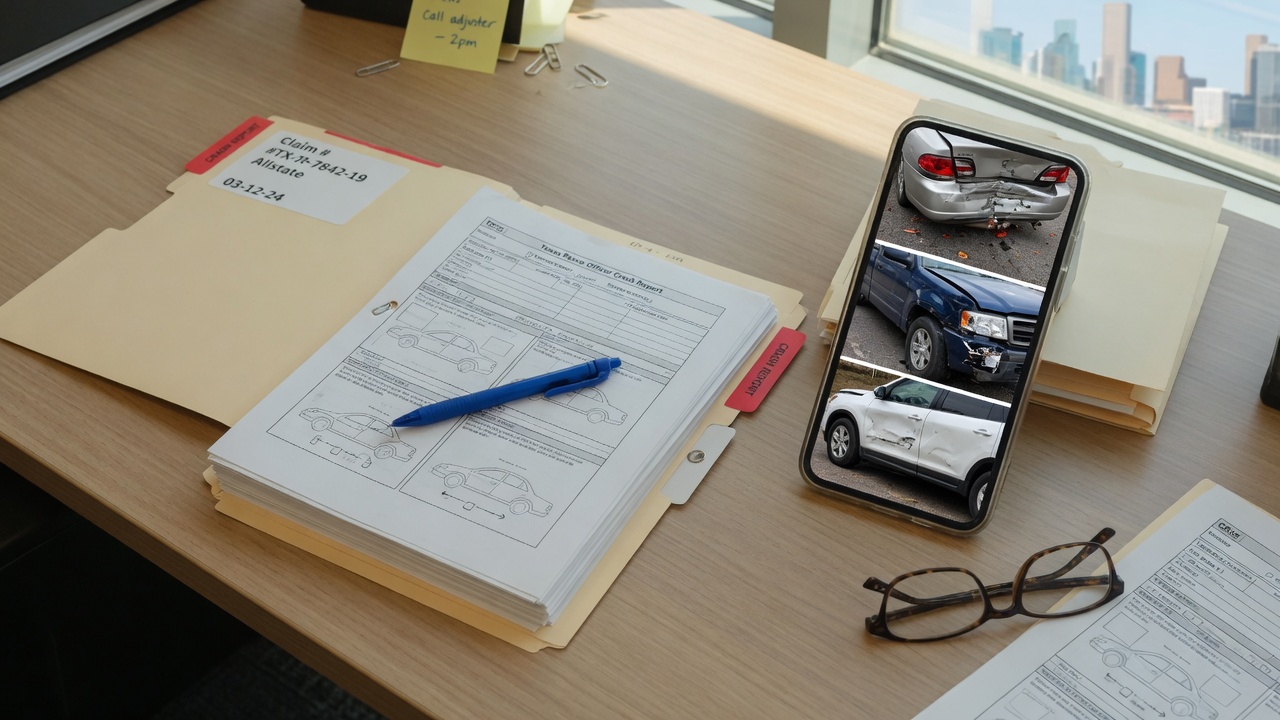
- The Texas CR-3 crash report and any officer supplement
- First- and third-party photos of all units, plates, DOT numbers, and scene marks
- Health-insurance and treatment records so the injury file and the truck file stay together
- Motor-carrier, trailer-owner, and insurance information as it becomes available
- Requests and follow-ups for camera footage and maintenance records when those paths are open
- Notices and claim paperwork kept in one place so you are not tracking five phone trees alone
- An organized file you can share with a licensed attorney when the matter needs legal representation
What is different about an 18-wheeler claim
A passenger-car crash often has two drivers and two carriers. An 18-wheeler file can have more than that before anyone has finished the first week.
The tractor, the trailer, the motor carrier, a shipper, and a cargo insurer are not always the same company. Houston’s freight pattern makes that stack common. Trucks move between the Port of Houston, rail ramps, and warehouse belts along I-10, I-45, I-69, and Beltway 8. When a crash happens on those roads, the paperwork is not one form. It is a list.
That is the job of this page. Home covers general personal injury case management. This page covers the commercial-truck layer: who is on the policy, what the Texas crash report actually recorded, and which records tend to matter before they are hard to get.
We help pursue a complete file. We do not represent you in court and we do not file a lawsuit in our name.
How Houston 18-wheeler intake works with our team
- 1First call, any hourCall (713) 561-3828. You do not need perfect answers. Tell us what you know: where it happened, whether anyone went by ambulance, whether the truck had a visible company name, and whether your vehicle was towed.
- 2Documents we ask you to gatherStart with what you can gather. Fax (281) 657-4659 or send them after the call. Crash report or the officer’s report number. Photos of every vehicle, including the tractor and trailer if it is safe. Your license, passport, or Matrícula, plus insurance cards. Health-coverage information so medical records can be organized from the start.
- 3Map the partiesWe help list who may sit on the file: driver, motor carrier, trailer owner, cargo interest, your carrier, and any underinsured layer. Getting the names right early keeps notices from going to the wrong desk.
- 4Records that often matter on a truck fileCommercial files can involve electronic logging data, inspection and maintenance history, and onboard cameras. Retention windows are not infinite. We help you track what has been requested and what is still outstanding. When the file needs a formal preservation request, that request comes from an attorney.
- 5Medical path and claim path togetherTreatment and paperwork should not run on two disconnected calendars. See medical coordination. If the vehicle was towed, see impound fee assistance.
Texas timing, in plain language
Most Texas personal-injury lawsuits have a two-year clock from the date of injury under Texas Civil Practice and Remedies Code § 16.003. Texas also uses a 51 percent comparative-responsibility rule: if you are found more than 50 percent at fault, recovery can be barred. Those are public rules, not a prediction about your crash. An attorney should confirm how they apply to your facts. Our role is to keep the file organized so that conversation is possible.
What this page is not
It is not a promise that a truck case “always wins.” It is not legal advice. It is not a substitute for a licensed attorney. When your file needs an attorney, it will already be organized and ready to share with a licensed attorney. You stay focused on healing. We help handle the process.
Related help
Questions people ask
No. The report number from the scene is enough to start. We can help you track the finished CR-3 through TxDOT’s Crash Records Information System once it is filed.
The company painted on the cab is not always the company that owns the trailer or the cargo. The CR-3 has a commercial-vehicle section for a reason. Missing trailer data is how notices go to the wrong insurer.
No. Case value depends on facts, injuries, coverage, and fault. We will not invent a number. We will help organize the documents a later evaluation would need.
Partial fault is common in multi-vehicle freeway crashes. Texas still allows a claim in many shared-fault situations. Do not guess your percentage on a form. Call us and keep the file honest.
Yes. English, Spanish, and Vietnamese. The same 24/7 number.
Help from day one, with your file organized for every step of the claim
Rainha & Associates provides case coordination services. Legal services are provided only by licensed attorneys under a separate agreement. Results are not guaranteed.
Call 24/7 · (713) 561-3828